
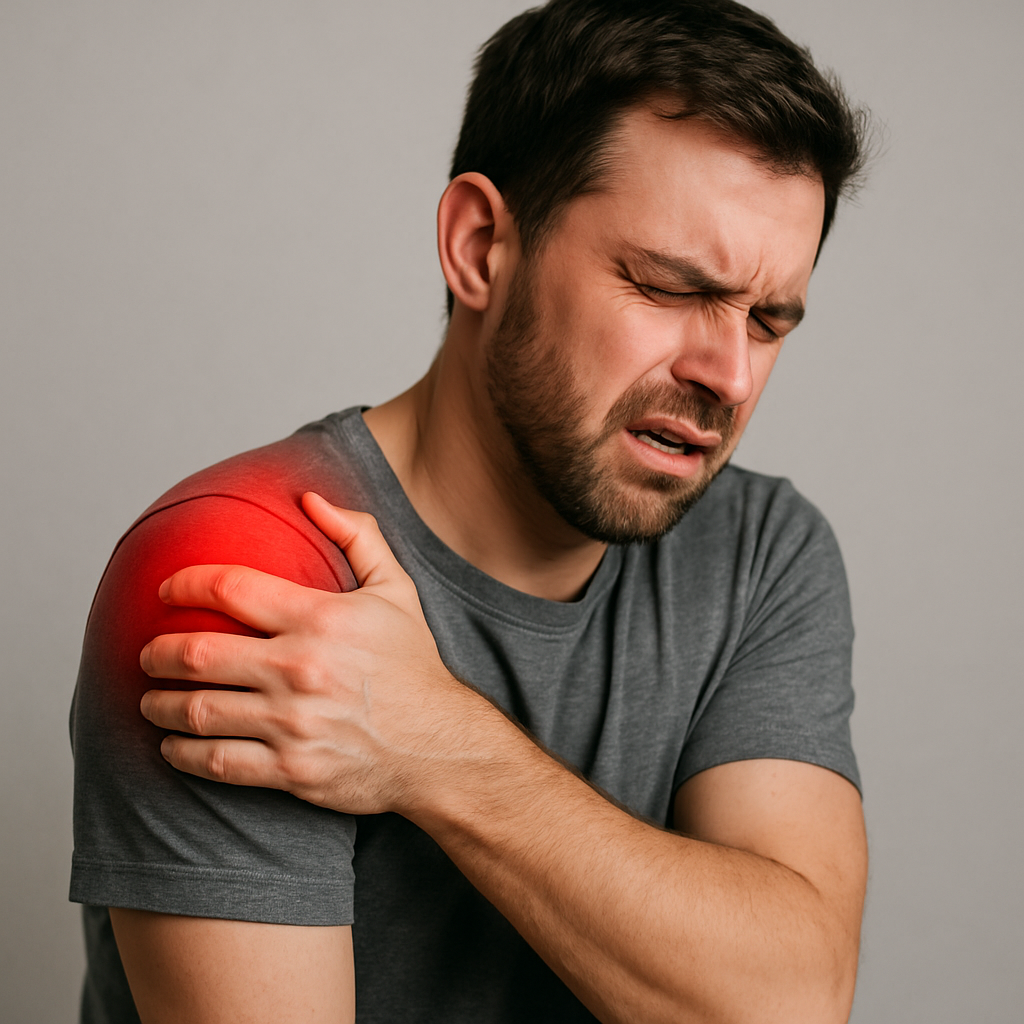

Frozen Shoulder: Why Your Metabolism Might Be Part of the Problem
Most people think frozen shoulder comes “out of nowhere” or is only caused by an injury. But new research shows it may actually be linked to what’s happening throughout your whole body — especially your metabolic and immune health.
A recent study suggests that frozen shoulder may be driven in part by:
- Leptin resistance — a hormone imbalance often seen in people with metabolic issues like obesity or prediabetes
- Overactive immune pathways (called JAK–STAT) that keep the shoulder inflamed
- Fibrosis — the body creating too much stiff, scar-like tissue instead of healing normally
Put simply: when the metabolic system is off, the immune system tends to stay “on,” and that can push the shoulder toward inflammation and stiffness that won’t calm down.
You see the same pattern in other orthopedic injuries
A large meta-analysis (a study that combines many studies together) found that people with metabolic diseases — especially diabetes, obesity, and high cholesterol — are much more likely to develop problems like:
- Tendon pain
- Rotator cuff injuries
- Slower or poorer healing after orthopedic surgeries
This means frozen shoulder isn’t the only condition connected to metabolic health. The healthier your metabolism is, the healthier your joints, tendons, and muscles tend to be.
What this means for patients
If someone has frozen shoulder — or shoulder pain that just isn’t improving — it may be worth looking at:
- Blood sugar and insulin resistance
- Diet and inflammation levels
- Stress management and breathing strategies
Improving these areas can support better healing, reduce inflammation, and help physical therapy work more effectively.
The big picture
Frozen shoulder may be less about “a bad shoulder” and more about a body that’s stuck in an inflamed, stressed state. Addressing metabolic health doesn’t replace physical therapy — it makes it more effective and can help prevent these problems in the first place.
Sources
De Luca P, Grieco G, Bargeri S, Colombo C, Guida S, Taiana MM, de Girolamo L. The interplay between metabolic disorders and tendinopathies: Systematic review and meta-analysis. J Exp Orthop. 2025 Sep 10;12(3):e70429. doi: 10.1002/jeo2.70429. PMID: 40937086; PMCID: PMC12421141.
Navarro-Ledesma S. Frozen Shoulder as a Metabolic and Immune Disorder: Potential Roles of Leptin Resistance, JAK-STAT Dysregulation, and Fibrosis. J Clin Med. 2025 Mar 6;14(5):1780. doi: 10.3390/jcm14051780. PMID: 40095902; PMCID: PMC11901274.